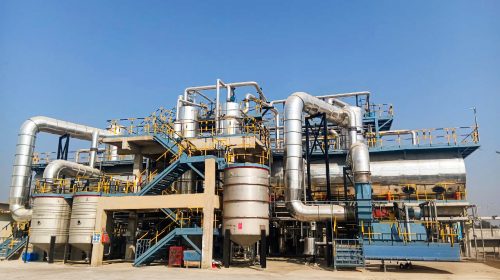

Effluent Treatment Plants (ETP)
Effluent Treatment Plants (ETP) – Advanced Chemical & Mechanical Process Integration
Introduction to Industrial Effluent Engineering
Effluent Treatment Plants (ETP) are engineered systems designed to treat industrial wastewater before discharge or reuse. Unlike municipal sewage, industrial effluent varies significantly in composition, toxicity, organic load, salinity, temperature, and pH. Therefore, ETP design requires a deep understanding of reaction chemistry, biological kinetics, fluid mechanics, mass transfer principles, and mechanical solid-liquid separation processes.
An effective ETP is not simply a sequence of tanks. It is a precisely integrated reaction and separation network engineered to maintain stability under dynamic loading conditions. Properly designed systems ensure:
- Regulatory compliance
- Process reliability
- Chemical efficiency
- Sludge minimization
- Energy optimization
- Long-term operational durability
Improperly engineered plants result in chemical wastage, unstable sludge formation, discharge violations, equipment failure, and increased operating cost.
Characteristics of Industrial Effluent
Industrial wastewater composition depends on the manufacturing process. It may contain:
- High Chemical Oxygen Demand (COD)
- Biochemical Oxygen Demand (BOD)
- Suspended solids (TSS)
- Dissolved solids (TDS)
- Heavy metals
- Oils and grease
- Toxic organics
- Acids or alkalis
- Surfactants and emulsifiers
- Color compounds
Key challenges include:
- Shock load fluctuations
- Toxicity spikes
- pH instability
- Temperature variations
- Hydraulic flow variation
Design must accommodate worst-case loading rather than average flow conditions.
Process Flow Structure of an ETP
A typical industrial ETP includes the following stages:
- Equalization
- Neutralization
- Coagulation and Flocculation
- Primary Clarification
- Biological Treatment (if applicable)
- Secondary Clarification
- Advanced Treatment (if required)
- Sludge Thickening and Dewatering
Each stage is engineered based on mass balance calculations and hydraulic design principles.
Equalization – Hydraulic and Load Stabilization
Equalization tanks serve as buffers that stabilize flow and pollutant concentration before downstream treatment.
Objectives:
- Homogenize influent composition
- Prevent hydraulic shock
- Reduce load fluctuation
- Avoid chemical overdose
- Prevent septic conditions
Engineering Parameters:
- Hydraulic Retention Time (HRT): typically 6–24 hours
- Tank volume sized for peak factor
- Continuous mixing or aeration
- Prevention of sludge settlement
- Controlled inlet distribution
Mixing energy must be sufficient to maintain suspension without excessive power consumption. Proper equalization reduces chemical consumption and improves overall reaction predictability.
Neutralization – pH Control Engineering
Industrial effluent often contains highly acidic or alkaline streams. Most downstream processes require a pH between 6.5 and 8.5.
Reaction Mechanism:
Acid-base neutralization follows stoichiometric control:
H⁺ + OH⁻ → H₂O
Dosing Requirements:
- Alkali dosing for acidic wastewater
- Acid dosing for alkaline wastewater
- Lime or sodium hydroxide for heavy metal precipitation
Design Considerations:
- Real-time pH monitoring
- Automated dosing pumps
- Reaction tank mixing intensity
- Prevention of overshoot
- Chemical storage safety
Incorrect pH control leads to:
- Ineffective coagulation
- Poor metal precipitation
- Corrosion
- Process upset
Precision in dosing control is critical for cost optimization and process stability.
Coagulation and Flocculation – Particle Destabilization Engineering
Industrial wastewater often contains colloidal particles that remain suspended due to electrostatic repulsion.
Coagulation Phase
Coagulants such as alum or ferric chloride neutralize surface charges on particles.
Key parameters:
- Rapid mixing intensity
- Contact time
- Coagulant dosage
- Temperature influence
Flocculation Phase
Polymers bridge destabilized particles into larger flocs.
Engineering factors:
- Gentle mixing to avoid floc breakage
- Polymer molecular weight selection
- Optimal dosage control
- Reaction time
Jar testing is typically used to determine chemical dosage optimization.
Poor coagulation results in high TSS carryover and clarifier inefficiency.
Primary Clarification – Sedimentation Engineering
After floc formation, gravity settling is used to remove suspended solids.
Design Parameters:
- Surface Overflow Rate (SOR)
- Weir loading rate
- Tank depth
- Sludge blanket stability
- Settling velocity
Clarifier design must prevent:
- Short-circuiting
- Hydraulic turbulence
- Sludge re-suspension
Mechanical scrapers continuously remove settled sludge to prevent compaction and anaerobic decomposition.
Biological Treatment – Organic Load Reduction
If the effluent contains biodegradable organic matter, aerobic biological treatment is incorporated.
Common Biological Systems:
- Activated Sludge Process
- Extended Aeration
- Moving Bed Biofilm Reactor (MBBR)
- Membrane Bioreactor (MBR)
Key Engineering Parameters:
- Food-to-Microorganism ratio (F/M)
- Mixed Liquor Suspended Solids (MLSS)
- Sludge Retention Time (SRT)
- Dissolved Oxygen (DO) level
- Oxygen Transfer Rate
Biological systems must be protected from:
- Toxic shocks
- Heavy metal carryover
- Extreme pH
- Temperature variation
Proper aeration design ensures stable microbial kinetics and high BOD removal efficiency.
Secondary Clarification
After biological treatment, biomass must be separated.
Engineering design includes:
- Sludge settling characteristics
- Return Activated Sludge (RAS) control
- Sludge withdrawal rate
- Overflow control
Maintaining correct sludge age prevents bulking and washout.
Sludge Management – Solid Handling Engineering
Sludge generated from chemical and biological processes contains high moisture content.
Sludge Characteristics:
- Organic biomass
- Chemical precipitates
- Inorganic solids
- 95–98% water content
Dewatering Techniques:
- Screw press
- Belt press
- Filter press
- Centrifuge
Performance indicators:
- Dry solids percentage
- Throughput capacity
- Polymer consumption
- Cake dryness
- Torque stability
Effective sludge management reduces disposal cost and environmental risk.
Heavy Metal Precipitation Engineering
Industries such as electroplating produce metal-containing wastewater.
Metal removal occurs via hydroxide precipitation:
M²⁺ + 2OH⁻ → M(OH)₂ (solid)
Critical control parameters:
- pH optimization
- Adequate mixing
- Settling time
- Sludge toxicity management
Improper precipitation leads to regulatory non-compliance.
Advanced Treatment Systems
Where discharge norms are strict, tertiary systems are implemented:
- Activated carbon filtration
- Ultrafiltration
- Reverse Osmosis
- Evaporation systems
Advanced treatment requires stable upstream pretreatment to avoid membrane fouling.
Energy Optimization in ETP
Major energy consumers include:
- Aeration blowers
- Pumps
- Mixers
- Dewatering machines
Optimization strategies:
- Proper motor sizing
- Variable Frequency Drives (VFD)
- Reduced pressure losses
- Periodic maintenance
- Balanced air distribution
Lifecycle cost evaluation is critical during equipment selection.
Automation and Monitoring
Modern ETP systems incorporate:
- Online pH sensors
- DO sensors
- Flow meters
- PLC-based control panels
- Alarm systems
- Data logging
Automation ensures:
- Chemical dosing precision
- Reduced manual error
- Compliance reporting
- Operational transparency
Compliance and Regulatory Standards
Industrial discharge norms typically regulate:
- pH
- BOD
- COD
- TSS
- Oil & Grease
- Heavy metals
- Toxic compounds
Engineering design must guarantee compliance during:
- Peak loading
- Seasonal variation
- Production fluctuation
Risk Mitigation and Redundancy
Professional ETP design incorporates:
- Standby pumps and blowers
- Overflow protection
- Emergency neutralization
- Chemical storage safety
- Structural corrosion resistance
Redundancy reduces shutdown risk.
Long-Term Reliability Engineering
Critical durability parameters include:
- Corrosion-resistant materials
- Bearing life calculations
- Pump stroke stability
- Mechanical seal reliability
- Structural integrity
Predictive maintenance includes:
- Vibration analysis
- Chemical consumption tracking
- Sludge volume monitoring
- Energy consumption trend analysis
Integrated Engineering Philosophy
An ETP must be viewed as an integrated process network where:
- Chemical reactions influence sludge volume
- Biological efficiency affects oxygen demand
- Hydraulic stability impacts sedimentation
- Automation controls chemical cost
Engineering must balance:
- Capital cost
- Operating cost
- Energy efficiency
- Chemical efficiency
- Regulatory reliability
Conclusion
Effluent Treatment Plants are critical compliance infrastructure for industrial operations. Their performance directly impacts:
- Environmental responsibility
- Regulatory license to operate
- Corporate reputation
- Long-term cost efficiency
A properly engineered ETP integrates chemical precision, biological control, hydraulic stability, mechanical durability, and automation intelligence into a unified treatment system.