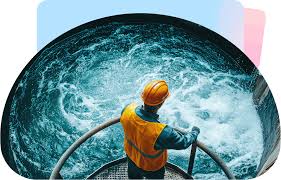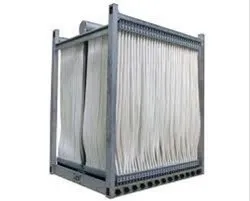
Transfluid Membrane Bioreactor (MBR) Systems combine the absolute precision of membrane separation with conventional biological wastewater treatment. By replacing traditional secondary clarifiers and gravity settling tanks with submerged microfiltration or ultrafiltration membrane modules, Transfluid MBR technology delivers a major leap in wastewater purification.
In an MBR system, high-density submerged cassettes are placed directly within an aerated biological tank filled with mixed liquor (activated sludge). As clean permeate water is drawn through the porous support structure by low-pressure suction, biomass, suspended solids, and bacteria are completely blocked at the membrane surface. The result is crystal-clear effluent water ready for direct reuse or sensitive environmental discharge, all within a fraction of the land footprint required by conventional plants.
Key Technical Features
-
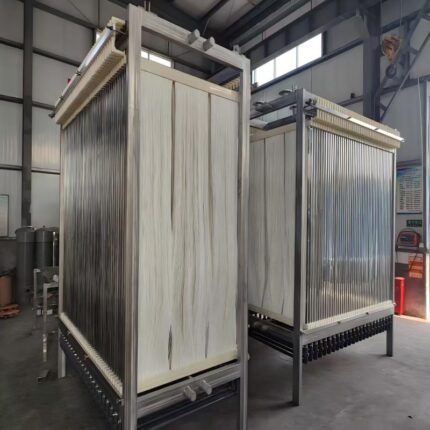
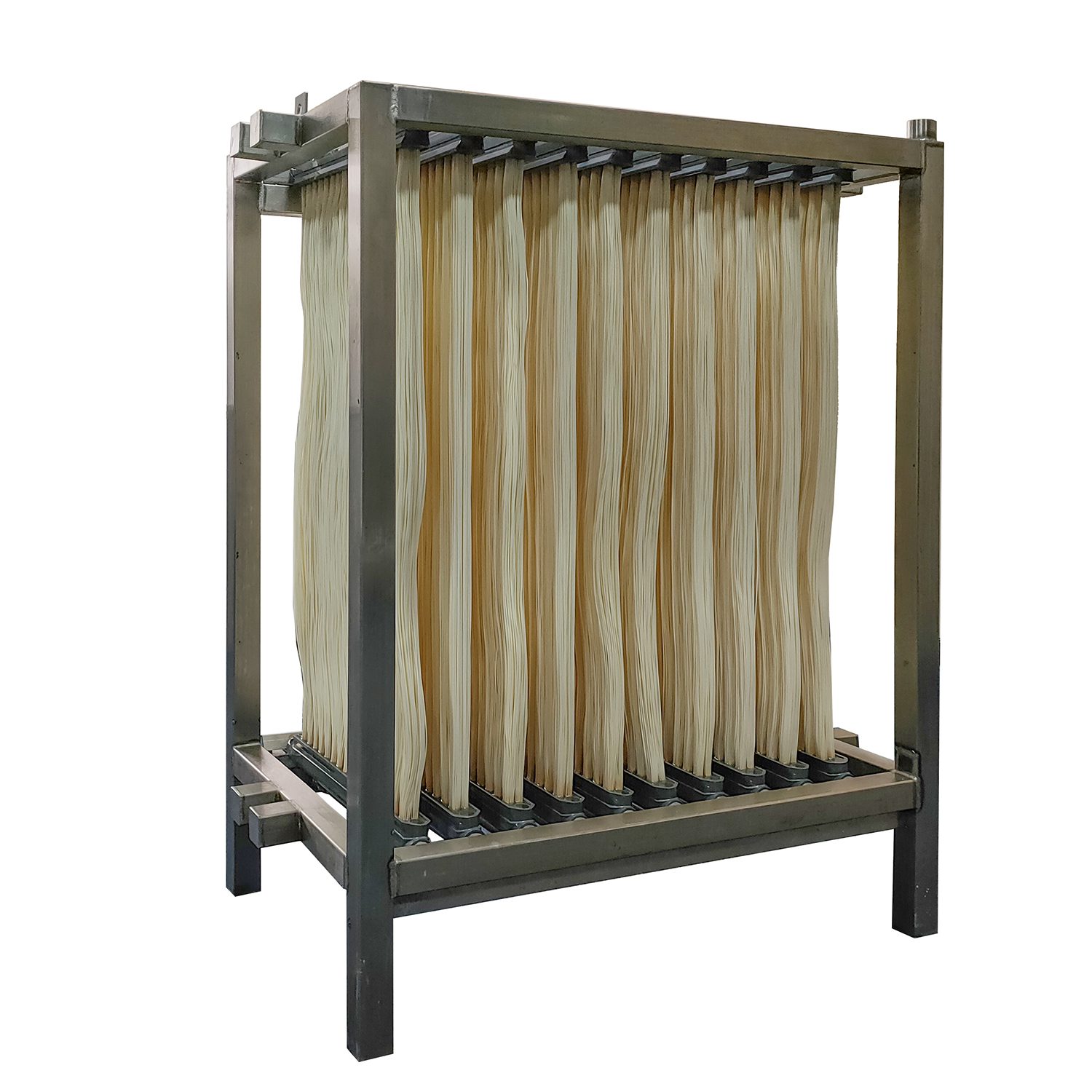
Submerged Cassette Design: Modular, high-density membrane cassettes are designed to fit directly into aerated biological tanks. This eliminates the need for massive secondary settling clarifiers, reducing the plant footprint by up to 50%.
-
Microscopic Pore Precision ($0.04 - 0.4\ \mu\text{m}$): Engineered with a specialized microscopic surface layer that keeps Mixed Liquor Suspended Solids (MLSS) completely isolated. It reliably acts as a absolute barrier against biomass, Extracellular Polymeric Substances (EPS), and suspended organic structures.
-
Integrated Air Scouring System: Built-in fine and coarse bubble aeration manifolds at the base of the cassette continuously scour the membrane surface. This dual-action aeration provides vital oxygen to the biological culture while keeping the membrane clean from foulant layers.
-
High MLSS Operating Limits: Unlike standard clarifiers that fail at high solids concentrations, Transfluid MBR membranes operate flawlessly in high-biomass environments ($8,000$ to $12,000\text{ mg/L}$ MLSS), drastically improving the organic degradation rate (BOD/COD removal).
-
Rugged Chemical and Mechanical Build: Constructed from high-strength hydrophilic polymers that resist compaction, tolerate intensive chemical cleaning cycles (CIP), and deliver an exceptionally long service life in harsh industrial matrices.
Technical Specifications & Performance Matrix
-
Brand: Transfluid
-
Configuration: Submerged Flat Sheet / Hollow Fiber Cassette
-
Nominal Pore Size: $0.04\ \mu\text{m}$ to $0.4\ \mu\text{m}$
-
Operating Principle: Submerged Biological Filtration via Negative Suction Pressure
-
Operational MLSS Range: $8,000 - 15,000\text{ mg/L}$
-
Treated Effluent Quality: * BOD: $<5\text{ mg/L}$
-
COD: $<30\text{ mg/L}$
-
Turbidity: $<0.2\text{ NTU}$
-
Suspended Solids (TSS): Non-detectable ($100\%$ removal)
-
Core Applications
-
High-Strength Industrial ETPs: The premier choice for treating highly concentrated wastewater from textiles, pharmaceuticals, chemicals, and food-processing industries where standard treatments fall short.
-
Commercial and Decentralized STPs: Ideal for hotels, shopping malls, and high-rise residential complexes where space is limited and treated water must be recycled for flushing, cooling towers, and landscaping.
-
Retrofitting Existing Plants: Easily upgrades old, underperforming Activated Sludge Process (ASP) plants to double their treatment capacity without expanding the physical concrete tank boundaries.
-
Zero Liquid Discharge (ZLD) Pre-Treatment: Acts as the perfect, high-clarity feed system for downstream Reverse Osmosis (RO) membranes by minimizing the Silt Density Index (SDI) of the treated effluent.
Standard Scope of Supply
Every Transfluid MBR package is customized to meet your specific biological loading requirements:
-
Premium MBR Membrane Cassettes with integrated permeate manifolds and air-scour headers.
-
Permeate Extraction Assembly: Low-head suction pumps, automated control valves, and digital pressure gauges to monitor Transmembrane Pressure (TMP).
-
Dedicated Process Aeration Loops: Connections ready for integration with primary Roots/Ring aeration blowers.
-
PLC-Controlled Backpulse/CIP System: Automated dosing setups for periodic chemical backwashing to ensure long-term flux stability.
Why Choose Transfluid MBR Membranes?
When regulatory standards demand flawless effluent quality and space is a major constraint, conventional wastewater systems simply cannot compete. Transfluid MBR Systems give plant operators complete control over sludge age and water clarity. They provide an ultra-compact setup that turns tough wastewater into an invaluable, reusable water resource.
Upgrade to Next-Generation Water Recycling
Contact our biological treatment division with your current plant dimensions, flow rate ($\text{m}^3/\text{day}$), and inlet BOD/COD metrics to receive an engineered MBR layout blueprint.